
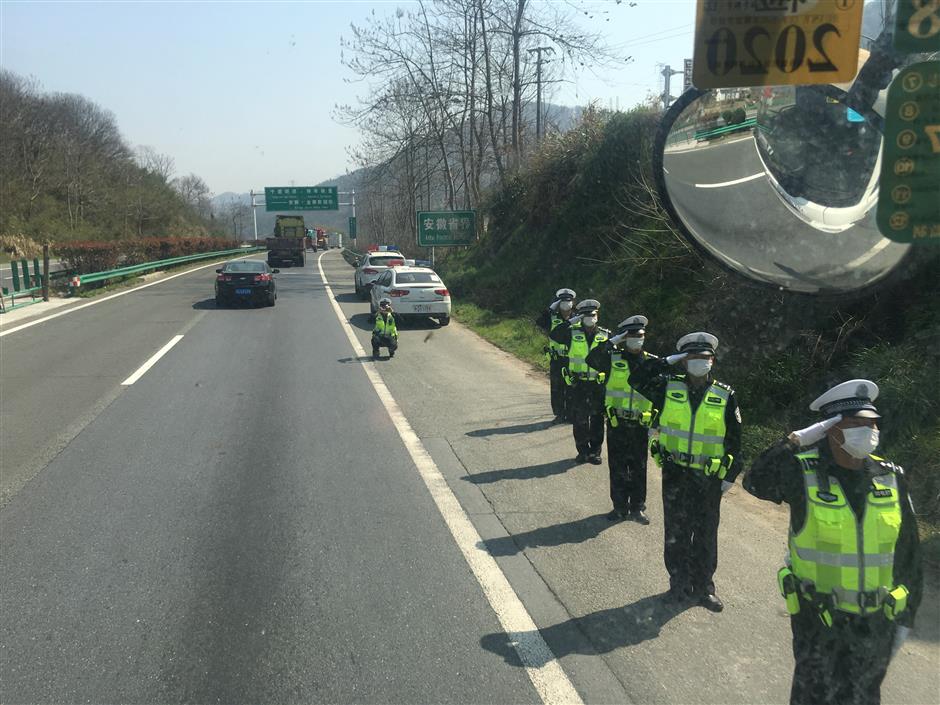
Wuhan police officer salute the first batch of returning medical staff with Shanghai East Hospital on Wednesday.
The first batch of Shanghai-based medical professionals came home from Wuhan, the heart of the novel coronavirus outbreak in China, on Wednesday, receiving warm salutes along the way.
Shanghai has sent a total of 1,649 medical staff in nine groups to assist Wuhan in central China's Hubei Province since late January. They've been fighting against COVID-19 along with medics from across the nation in Wuhan.
Eight members of the medical team from Huashan Hospital arrived in Shanghai at 10am in five mobile rescue vehicles. They left Wuhan on Tuesday afternoon.
Over a dozen local traffic police stood on both sides of the road entry into Jiading District and saluted the team members.
Another eight medical rescue vehicles and two logistic trucks with 18 staff from Shanghai East Hospital set off from Wuhan on Wednesday morning. They are expected to arrive in Shanghai in the evening.
The remaining 35 members of the hospital, along with a dozen medics from Huashan Hospital, take a charter flight with China Eastern Airlines back home in the evening.
Another 26 medical professionals with Huashan Hospital have voluntarily stayed in Wuhan to continue fighting the epidemic.
All returning team members will be quarantined for 14 days for medical observation, while the vehicles will also be sealed for two weeks. The vehicles were disinfected with chlorine before leaving Wuhan.
Summoned by the National Health Commission, the national emergency rescue team of Shanghai East Hospital rushed to Wuhan on February 4. They brought 25 tents, which can house 300 outpatients per day, 40 isolation units and an ICU for eight.
The medical team treated 533 coronavirus patients. No patient died or relapsed and no member of the team became infected.
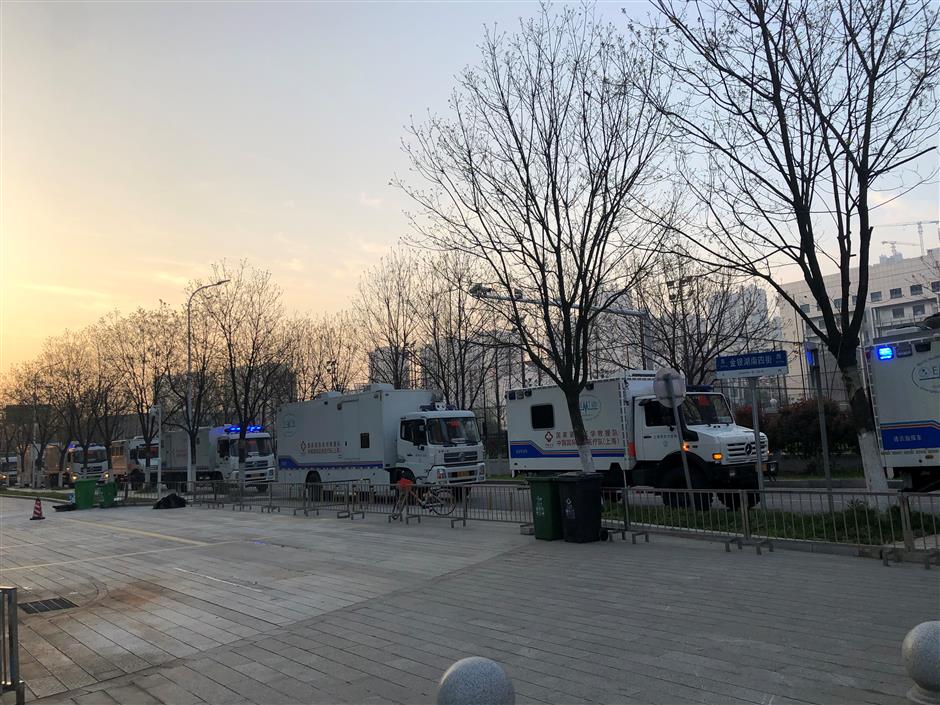
Eight medical rescue vehicles and two logistic trunks with 18 staff with Shanghai East Hospital set off from Wuhan on Wednesday morning.
The team established a medium-size temporary hospital within three hours at a cultural complex known as the Wuhan Living Room. They treated patients with mild symptoms at the makeshift hospital for 44 days.
"The tent hospital showcased its flexibility, mobility and multifunctionality during the mission," said Lei Han, leader of the hospital's medical team.
Apart from treating some 100 patients per day, each doctor was asked to take charge of 10 patients. They communicated with their main patients around the clock via WeChat.
To cope with a labor shortage, some senior nurses were appointed as assistant doctors to help visit the wards and communicate between doctors and patients, Lei said.
Feng Qiang, a clinical psychologist with the hospital, also carried out psychological counseling among patients.
Life was not easy in the makeshift hospital. A heavy snowfall hit Wuhan on February 15, and members of the medical team removed the snows overnight to prevent the tents from collapsing.
Huashan Hospital treated 1,124 patients in the Wuchang temporary hospital established in Hongshan Stadium. A total of 833 patients have been discharged while the rest have been transferred to other hospitals.
The medical team also managed to ensure that no patient died or relapsed and no medical staff got infected, according to the hospital.
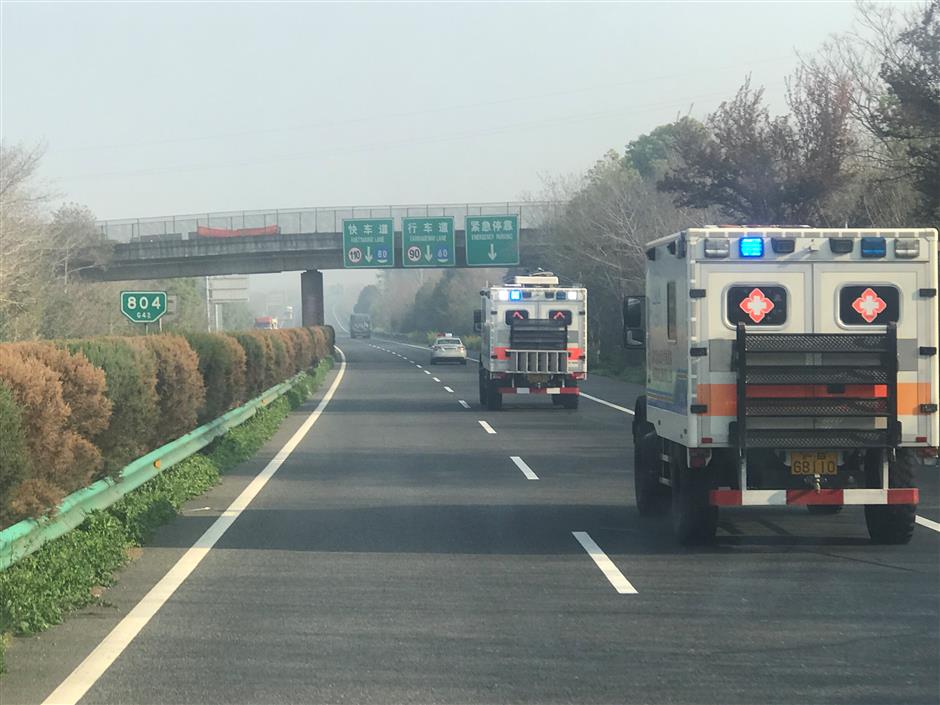
Five mobile rescue vehicles with Huashan Hospital drive back to Shanghai from Wuhan.
Shanghai adjusts key areas list, removing Japan
Japan has been removed from the city's list of key countries and regions for epidemic prevention and control, while the Philippines has been newly added, authorities announced.
The adjustment was made on the basis of overseas trends in epidemic growth and Shanghai's work to prevent transmission from overseas virus carriers, according to the leading working-group on local epidemic prevention and control.
Now Japanese residents and those who have been to Japan before coming to Shanghai will receive a nucleic acid test on arrival if they don't show symptoms of coronavirus disease and have not traveled to other key areas or had contact with suspected patients.
Those with positive test results will be sent to designated medical institutions, while those testing negative will be left to manage their health on their own.
The leading group office said the city will still enforce temperature screenings at Metro stations and airports for those entering Shanghai. Supervision of fever clinics will be strengthened, with tough screening on suspected cases.
Local residential communities will continue taking the temperature of each entering person. Communities will also continue reporting on every resident with a fever.
The office reiterated that customs will perform onboard checks of every flight entering the country and check every inbound passenger's health declaration card and temperature. All those coming from, or having been to, key countries and regions for epidemic prevention and control will be quarantined for 14 days. Those who are from or traveled in non-key countries will be subject to epidemiological investigation.
Except for those under concentrated isolation, all other inbound passengers will receive nucleic acid tests.
People from key countries who meet the requirements for home-based isolation will first have a nucleic acid test. Those with negative results are allowed to be quarantined at home for two weeks while those with positive result will be delivered to medical institution for treatment.
If a person leaves their home without permission during his or her quarantine period, they will be punished under the law.
Gong Zheng appointed Shanghai acting mayor
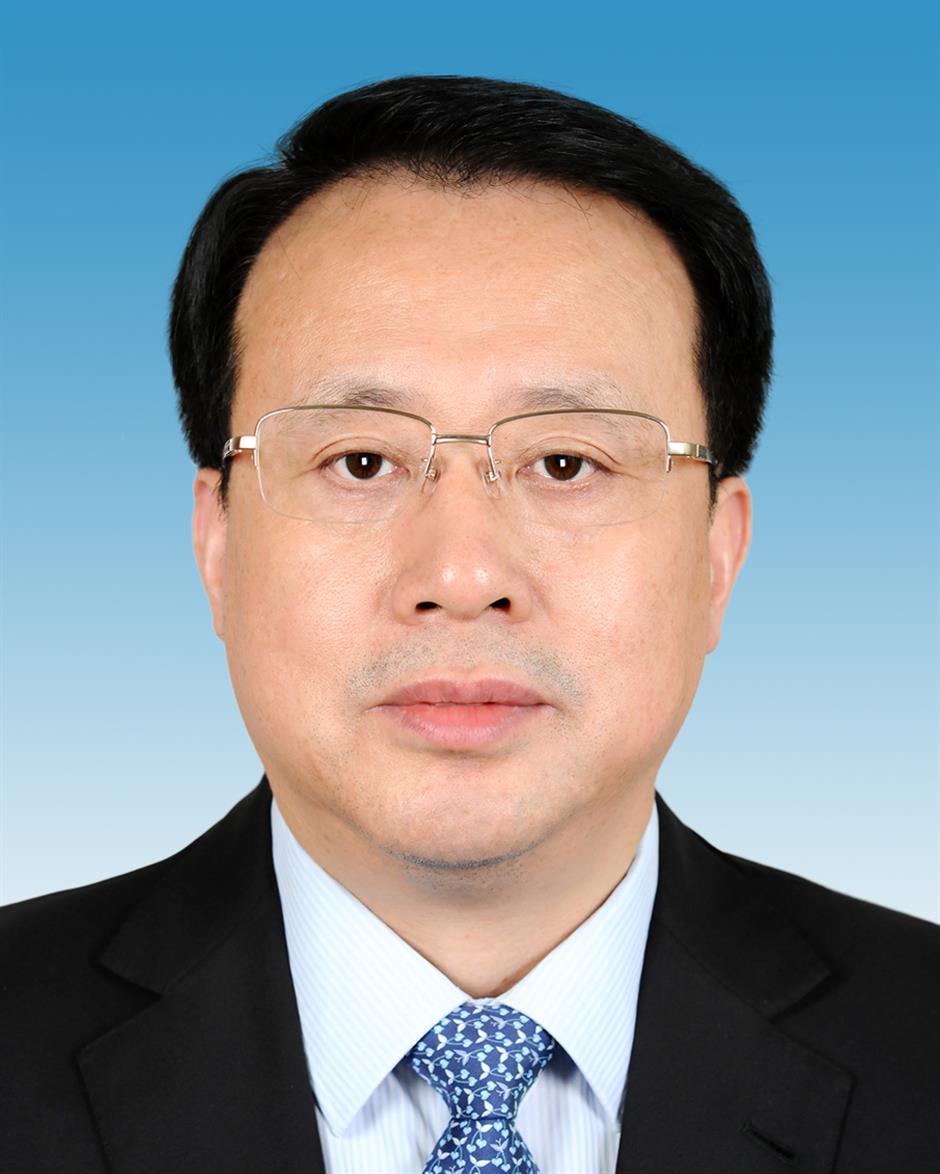
Gong Zheng
Gong Zheng was appointed acting mayor of Shanghai during a meeting of the city’s legislature on Monday.
Gong, who was born in 1960, is from Suzhou, in Jiangsu Province, and worked as head of the government of Shandong Province and vice Party Secretary of the province before this latest appointment.
Previously, he worked as Party Secretary of Hangzhou, Zhejiang Province, and vice head of the government of the province. Before that, he was vice head of China’s General Administration of Customs.
Gong was also appointed a vice mayor of Shanghai.
The previous Shanghai mayor, Ying Yong, was appointed Party Secretary of Hubei Province in February.
10 new imported coronavirus cases reported in Shanghai
Ten more imported coronavirus cases were reported in the city on Sunday, bringing the total number of such infections to 66. Another 18 imported suspected cases are undergoing check, said the Shanghai Health Commission on Monday morning.
Among the newly diagnosed cases is an Anhui Province native, who made a business trip in Burkina Faso. The person left Quagadougou on March 17 and arrived at Shanghai Pudong International Airport the next day via Addis Ababa in Ethiopia and was put under quarantine upon arrival.
The second case is a Spanish, who left Dubai on March 19 and arrived at Shanghai Hongqiao International Airport the same day via Beijing and was put under quarantine upon arrival.
The third case is a national from the UK, who left London on March 19, arrived at the Pudong airport the next day via Bangkok and was put under quarantine upon arrival.
The fourth case is an American, who left New York on March 19, arrived at the Pudong airport on March 21 via Tokyo and was put under quarantine upon arrival.
The fifth case is a Henan Province native, who studied in the UK and left London on March 15 and arrived at the Pudong airport the next day via Kuala Lumpur. The person was put under quarantine upon arrival.
The sixth case is a Shanghai native, who studied in the UK and left London on March 16, arrived at the Hongqiao airport the next day via Guangzhou and was put under quarantine upon arrival.
The seventh and eighth cases are a mother and a daughter, who are French. They left Paris on March 20, arrived at the Pudong airport the next day and were put under quarantine upon arrival.
The ninth case is a Shanghai native, who visited family in the US, left New York on March 16 and arrived at the Pudong airport the next day via Taipei. The person was put under quarantine upon arrival.
The tenth case is a Shanghai native, who studied in the US, left Chicago on March 18 and arrived at the Pudong airport the next day via Taipei. The person was put under quarantine upon arrival.
All the 10 imported cases have been transferred to designated hospital for treatment and their 47 close contacts on the planes have been tracked and put under quarantine and observation, the commission said.
There were no new locally transmitted cases reported during the day, while one local suspected case is undergoing test. So far, Shanghai has reported 338 coronavirus cases.
Meanwhile, one patient was discharged upon recovery.
So far, 72 patients are hospitalized, including 65 imported cases. Sixty-two patients are stable, three are seriously sick and seven are in critical condition.
A total of 328 patients have been discharged upon recovery and there have been four local fatalities so far.
On Sunday night, the city government replaced Japan with the Philippines on its list of 24 countries hit hardest by the coronavirus outside China.
Now, countries on the list are Australia, Austria, Belgium, Canada, the Czech Republic, Denmark, Finland, France, Germany, Greece, Iran, Italy, the Philippines, Malaysia, Netherlands, Norway, Qatar, Saudi Arabia, South Korea, Spain, Sweden, Switzerland, the United Kingdom and the United States.
Nucleic acid tests required for all international arrivals in Shanghai
Shanghai ordered people arriving in the city from other countries to undergo nucleic acid testing (NAT) to screen for coronavirus from Monday, the city's health commission announced on Sunday.
Wu Jinglei, director of the commission, said they have dispatched teams of experienced nurses to local ports to help customs officers take samples.
The new measure will expand a program that previously only applied to those coming from 24 heavily-hit countries, no matter their nationality.
Wu said all districts will give nucleic acid tests to new arrivals at temporary checkpoints to strengthen the screening.
Seventeen close contacts with a coronavirus patient that was confirmed in Jinan, Shandong Province on Saturday have been traced by the Shanghai Center for Disease Control and Prevention, according to Wu. They are still looking for the others who may have had close contact with the person from overseas who once stayed in Shanghai for a while.
Last week, the Shanghai government ordered people arriving in the city from 24 heavily-hit countries where they lived or traveled within the past 14 days to undergo 14-day quarantine at home or designated places.
3rd Shanghai medical team returns home from Wuhan
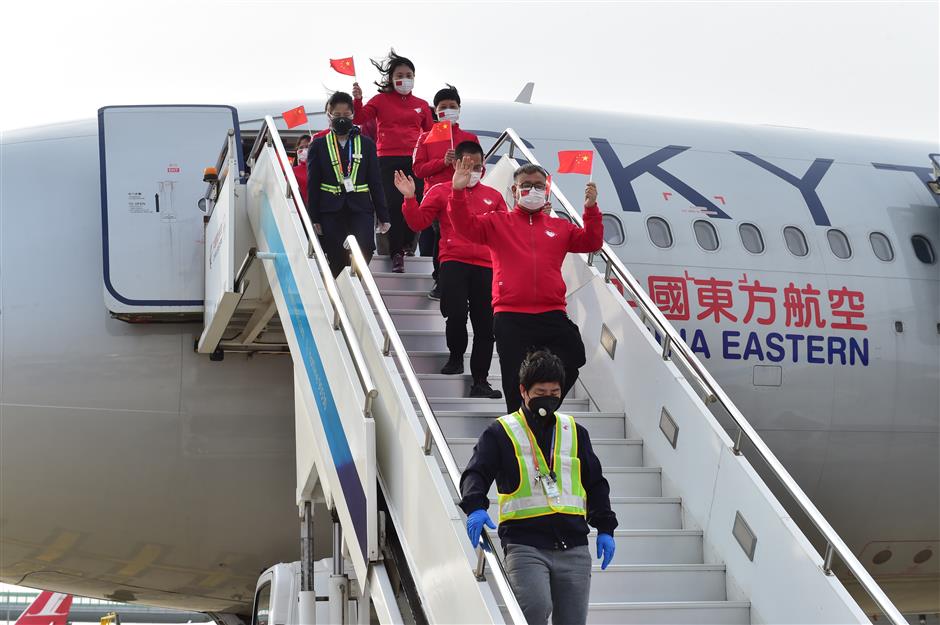
The third medical team from Shanghai disembarks from a China Eastern flight from Wuhan on Sunday.
Led by Dr Chen Erzhen, vice president of Ruijin Hospital, more Shanghai-based medics came home from Wuhan on Sunday.
The third medical team from Shanghai includes 148 doctors, nurses and support staff from 40 local hospitals including Huashan, Zhongshan and Ruijin.
They arrived in Wuhan on January 28, the third day of Spring Festival holiday and treated 332 seriously ill patients at Wuhan Third Hospital. Under their care, 278 patients have recovered.
The ICU operation by the Shanghai team and the hospital was shut down on March 16 after all the patients were either discharged or transferred.
"We just did our duty as medical workers," said Chen. "I hope we go back soon, without masks, to visit the tourist sites in Wuhan."
Chen participated in the fight against SARS in 2003 and went to support Sichuan Province after the Wenchuan earthquake in 2008.
Wuhan citizens, hotel staff and volunteers showed their gratitude in farewells to the medical team. Residents shouted "thank you" from windows. Drivers honked their horns on the streets.
Tu Guowei, an ICU associate chief physician with Zhongshan Hospital who had pledged to stay in Wuhan until the campaign had succeeded, returned with the team. "My duty is to do my best for each patient," he said.
Tu, along with nine associates from Shanghai, worked in the ICU around the clock.
Apart from treatment, Tu's team also offered counseling to elderly patients to help them build confidence, which was key to their recovery.
His colleague Zhang Xiaoyun, a senior nurse with Zhongshan Hospital, also returned. She had had her long hair cut off and her head shaved before heading to Wuhan.
"The recovery of each patient made me feel that all the sacrifice was worthwhile," Zhang said. She was pleased with the transformation of Wuhan, from not having enough beds for the sick just a few months ago to the ultimate closure of the ICU.
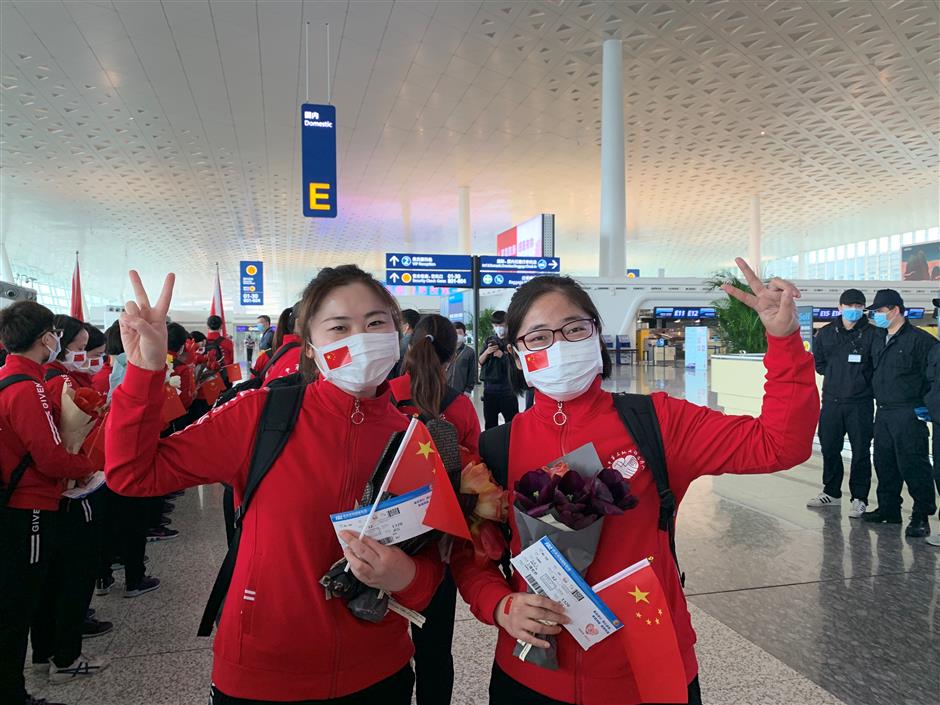
Members of the Shanghai team pose at Wuhan airport before flying back to Shanghai.
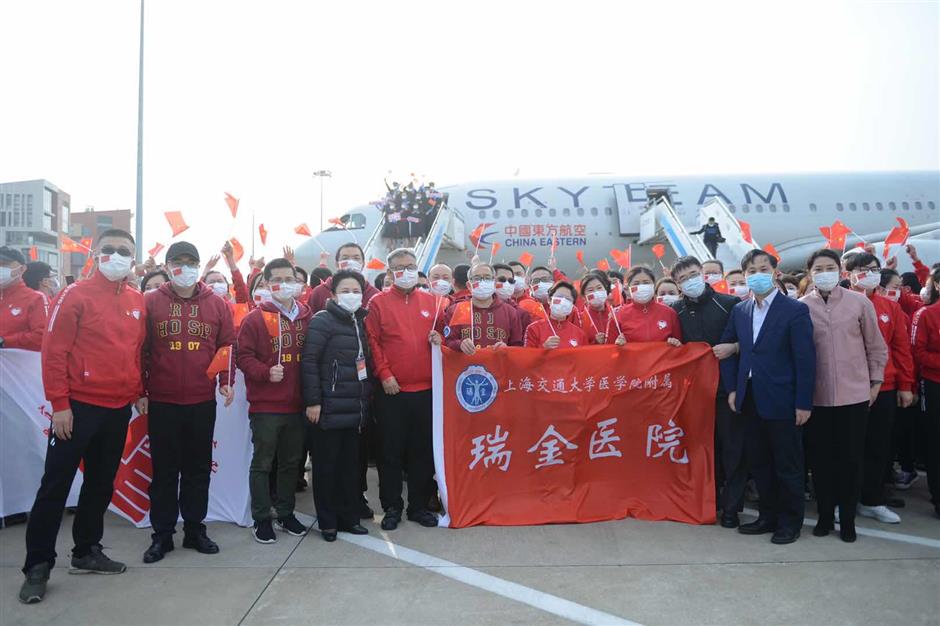
The Ruijin Hospital team arrives at Hongqiao International Airport on Sunday.
Zhao Xiaoling, a nurse with Renji Hospital, said she missed her family and hometown Shanghai after 55 days away.
"I've had many unforgettable experiences and have formed a deep friendship with my colleagues," Zhao said.
The returnees also included Yu Yuetian, an associate chief physician at Renji Hospital's critical care department. He came to public attention after a photograph of him kneeling on the ground while treating a patient was posted online.
"We've been under great physical and mental pressure in the ICU, but we are heartened by the recovery of the patients," Yu said.
The team, along with six pathologists, eight emergency rescue team members, took a China Eastern Airlines flight to Hongqiao at around 3:30pm, with the same captain who took them to Wuhan on January 28.
"We've had an appointment with the team to bring them back when their fight in Wuhan was won," said Liu Mingfu, the captain.
Flight attendant Zhou Zhenyi was reunited with her cousin, Li Lei, a respiratory doctor with Shanghai Fourth People's Hospital, at the cabin door. She presented White Rabbit, a time-honored Shanghai sweet, to her cousin and other team members.
"My cousin often bought me White Rabbit when I was young. I'd like to welcome him home with one today," Zhou said.
China Eastern deployed five charter flights to take a total of 912 medics back to Shanghai, Kunming in southwest Yunnan Province and Lanzhou in northwest Gansu Province on Sunday. China Southern Airlines has deployed 18 charter flights to bring over 2,700 medical staff back home.
Over 30,000 doctors and nurses from across the nation rushed to Hubei to help fight the COVID-19 epidemic. They began returning last week as the spread of the epidemic slowed.
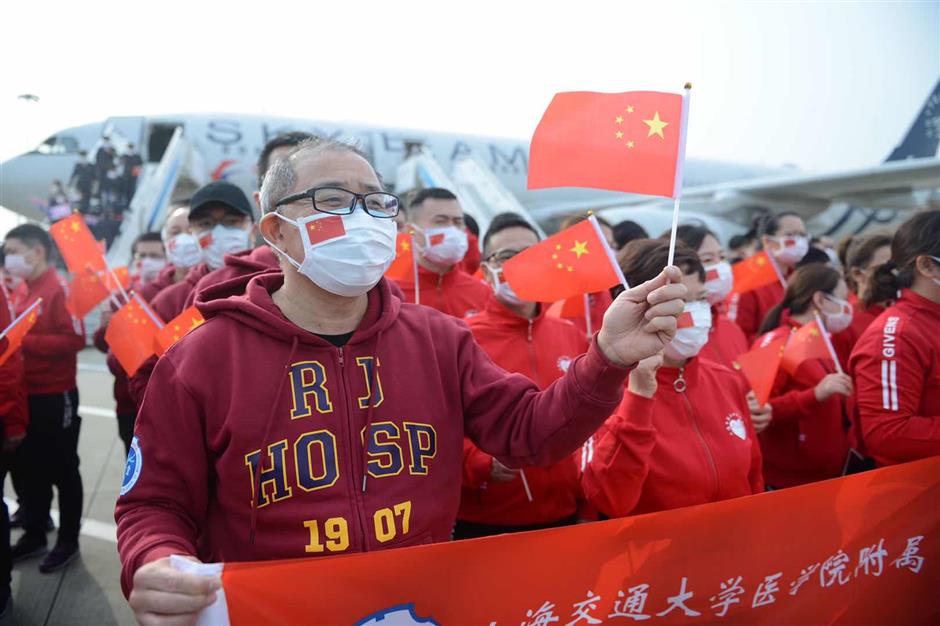
The team from Shanghai's Ruijin Hospital arrives at Hongqiao airport on Sunday.
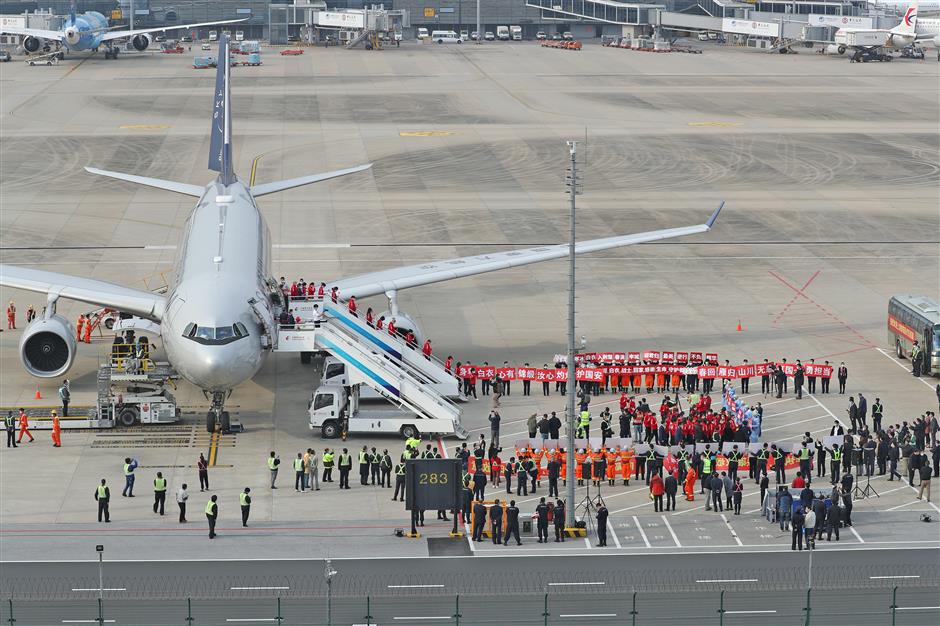
A welcoming ceremony takes place on the tarmac.
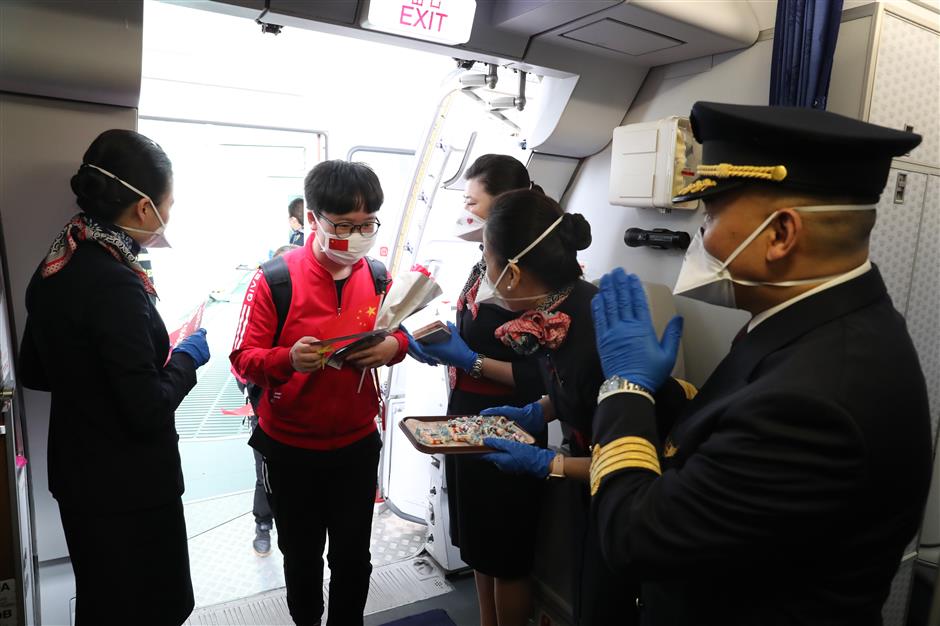
Captain and flight attendants present Shanghai candies to welcome the team onboard.
【相关链接】
上海日报 www.shine.cn/news/metro/2003184586/?from=timeline&isappinstalled=0
上海日报 www.shine.cn/news/metro/2003184612/?from=timeline&isappinstalled=0
上海日报 www.shine.cn/news/metro/2003174530/?from=timeline&isappinstalled=0